



Jun 20 2010
Return on Investment – Real and Psychic
By: Wade Dokken, Wealthvest Financial Services

All recessions have different characteristics. A prolonged and highly over-heated real estate bubble largely induced the recession that began in December 2007. Housing related industries grew to represent nearly double their historic economic activity in the United States—a painful waste of money, since these funds were being diverted from capital formation for factories and other productive resources.
Then there was the stock market bubble. The S&P 500 stock index reached a high of over 1,500 in March, 2000. What’s noteworthy about this value is the P/E ratio—over 40x earnings. This is against a commonly calculated historical average of 15x earnings. Buyers of stocks in early 2000 never had a prayer. A decade of equity market risk has provided plenty of risk but no net return.
Shortly after the stock market began to cool, the United States was hit by 9/11 and the Fed loosened the money supply to reduce the severity of a potential recession. This environment of loose credit resulted in the “rolling bubble” syndrome. Financial asset prices recovered from their 2002 troughs and in 2007 passed the previous highs of 2000. At the same time, housing stock was having a massive bull market party. The value of residential homes appreciated like no other time in U.S. history. As we now review the 27 months of this recession, we need to analyze whether we are at an end, what confirms the end, and where are the investment opportunities today.
First, I believe evidence is strong that we are indeed at the end of the recession. Economic activity has experienced two strongly positive quarters. This does not rule out a second dip, but it is increasingly unlikely. World governments and specifically the U.S. government—under two administrations of differing political parties and an independent Federal Reserve—intervened aggressively and early. Many consider the lack of timely and sufficient action in 1929 was what allowed a similar financial asset bubble “pop” to morph into the Great Depression. The U.S. employment data suggests the beginnings of a net hiring trend—real growth in total employment. This is essential for a broad- based recovery.
Finally, the two culprits of this recession — a 40% loss of stock market capitalization and an unprecedented loss in residential real estate value – have also been arrested.
The markets have recovered $6 trillion of the $17 trillion lost by Americans in stocks and housing investments.
While we are coming out of this recession—consumer spending, housing, manufacturing, banking, and services are all on the rise, however a substantial dark cloud hangs over our heads and the collective heads of much of the developed world—debt – particularly public debt. Our debt load—partly magnified by the severity of the recession and the enormous loss of GDP and the accompanying governmental revenues—is scheduled to grow. Our nation has engaged in a decade of creating additional public expenditures without offsetting revenue while in fact reducing public revenue. This shows no signs of abating and our nation has barely addressed the baby boom age wave and the coincident social costs—pensions, medical care, increase in life expectancy.
It is difficult to refute that the Western world has a financial crisis and this crisis leads inevitably to inflation. In a sense it is rational for world governments to pursue this course. A pursuit of inflation—reducing the stress of homeowners whose equity has vanished and reducing the burden of the public debt – may in fact be the only option. In this scenario, stocks fail to hold their value. Look no further back than 1965-1982 and you will see that equities can be devastated. Bonds fare equally poorly. Unique real estate—the kind that cannot be created or reproduced—has proven to be the best store of value in inflationary times.
Our long-term prognosis is extremely healthy. We remain the “come to country” for immigrants attracting over 50% of the skilled ones. We lead in nearly every measure of economic competitiveness. Our research and development spend is 1/3 of the world’s. Our workers are ten times more productive than Chinese workers. In his book, “The Next Hundred Million”, Joel Kotkin also makes it clear that America’s Heartland will be a disproportionate beneficiary of the next 100 million Americans. All the clichés—clean water, fresh air, breath-taking mountains, and access to wilderness while still remaining commercially and socially connected through the advances of the internet resonate in his demographic studies.
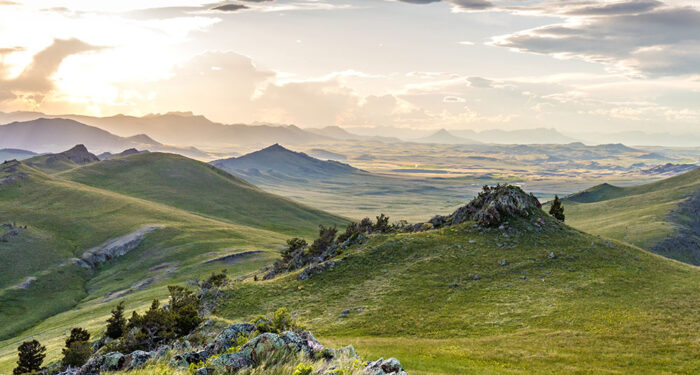
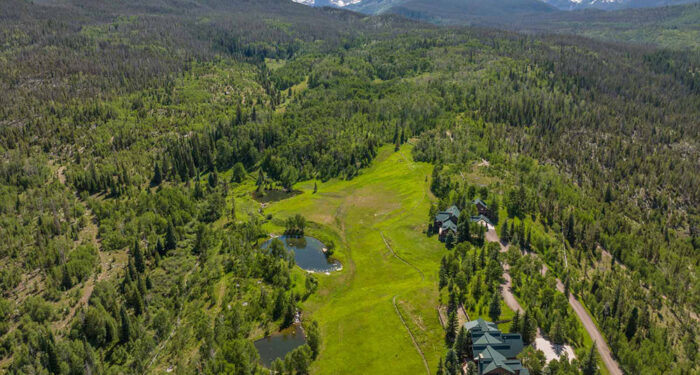
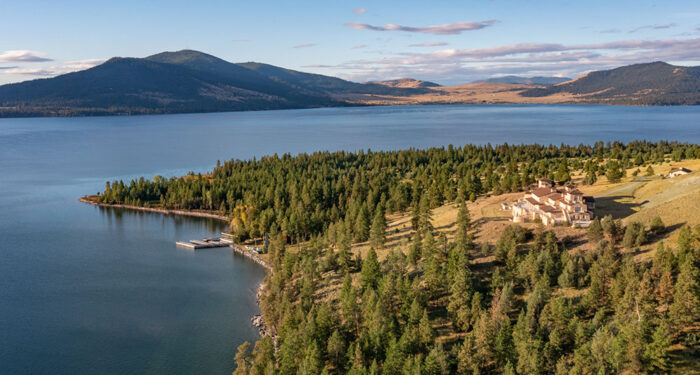
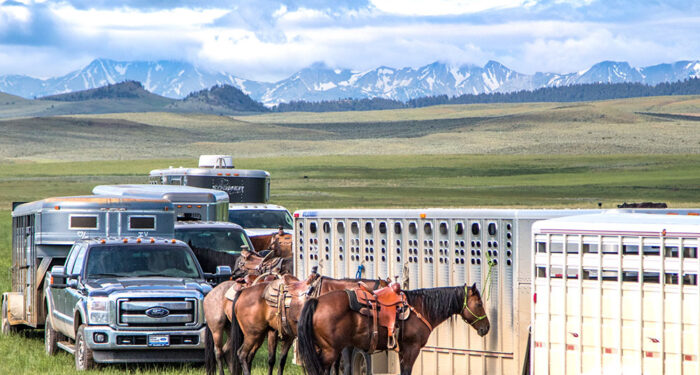
This desire is not only true in the abstract, but also in the lives of real people. I was the CEO of a substantial financial services company in Connecticut. The company was sold and my wife and I and our three boys purchased a ranch in Montana’s Paradise Valley through Hall and Hall. Our property has not only given us the greatest joy but the Paradise Valley is one of those rare places, where the name fails to do justice to the place. Our ranch has few cattle (only a few of the neighbor’s strays), but it has elk, wolves, lions, bears, and moose. The vistas are unlike anything in the United States—my bias is real and unapologetic. The investment case I originally made for a land purchase in the Rocky Mountains was strictly left – brained. However, in truth, it was right-brained and came straight from the heart.
In any respect, both sides of my brain and my heart came out on top.
Our ranch has held its value far better than my stock portfolio or my residences and the outlook for inflation makes it the strongest option for the future.
The “Next Hundred” will want to experience the Rockies as much as you or I today. The financial dividends, prior to capital gains, are not great, but the psychic dividends—extracted daily from this place – surpass in value any cash dividend received from any stock. In the meantime, our family has met some of the dearest friends in our lives. Most importantly, every day we wake to trout jumping in our pond, eagles flying overhead all against the backdrop of the snow-capped peaks of the Rockies.