Listings
Rotational Grazing on Irrigated Pasture: A Nebraska Example
Jun 8, 2026 | Hall and Hall

Rotational Grazing on Irrigated Pasture: A Nebraska Example
Water and irrigation infrastructure, as well as the forage mix, are necessary for a cattle rancher to operate at capacity with a grazing plan that helps the land keep pace with the cattle.
For ranches built around a summer cow-calf program, that means managing rest periods as carefully as stocking rates and understanding what plants need to provide above-maintenance production. Whitetail Farm, a 2,080±-acre operation in Nebraska, offers an example of how this type of management practice is used on a working farm in the Sandhills.
How the Rotation Works
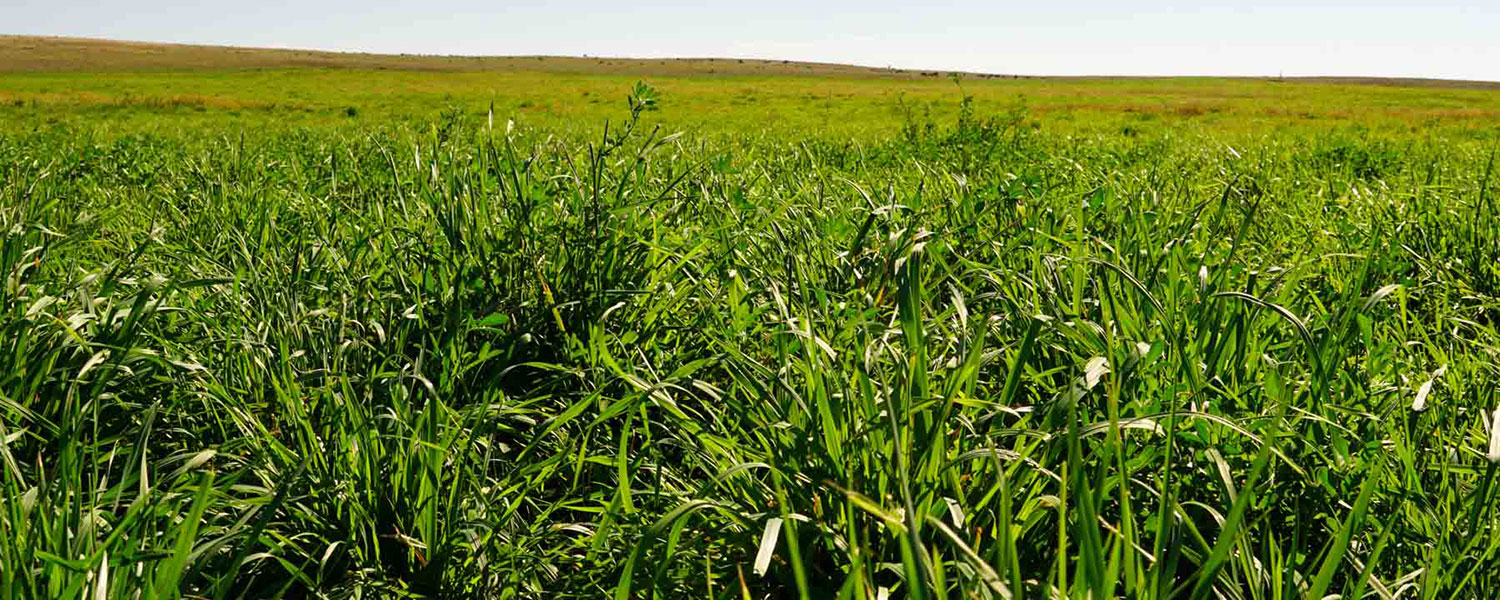
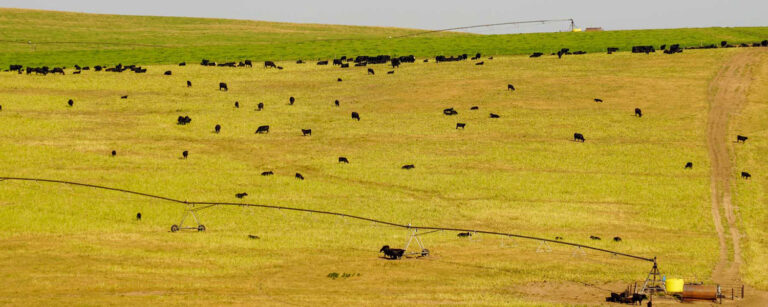
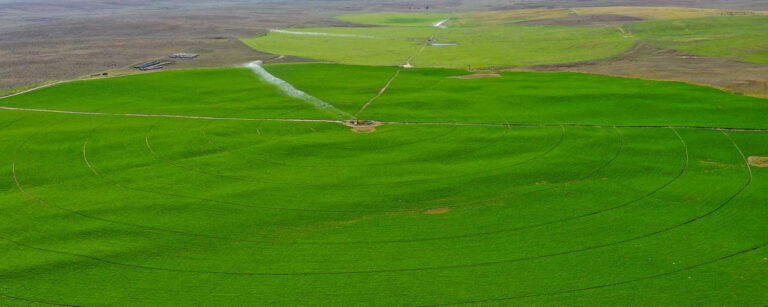
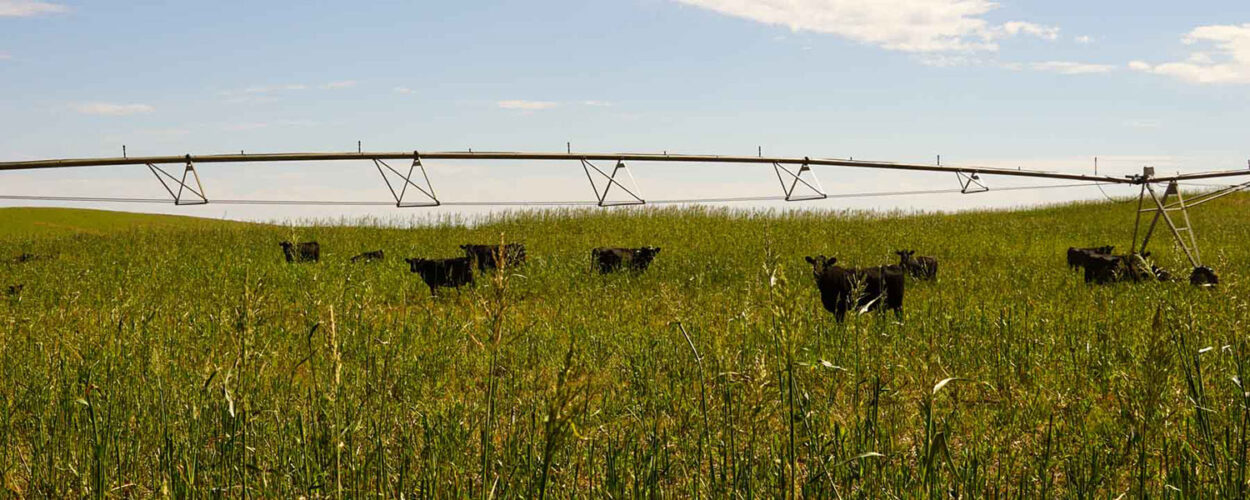
Whitetail Farm runs a semi-intensive rotational grazing program across ten center-pivot irrigation systems covering 1,309± certified irrigated acres. Each pivot is fenced separately and carries its own water supply, capable of supporting up to 800 head at once. In practice, the herd is typically split into two groups of 400 and rotated through the pivots.
The forage mix is planted to a combination of cool-season perennial grasses, alfalfa, and summer annuals. Cool-season grasses come on strong in spring and early summer, a time to allow for early growth before introducing grazing cattle. Summer annuals, including sudan, carry the program through the hotter months when cool-season production slows. The result is a more consistent forage supply across the full grazing season.
The Principles Behind the Rotation
A graze-rest rotation works because of how plants recover after grazing. Three things determine whether a pasture stays productive over time: sufficient leaf area for photosynthesis, healthy root systems to take up water and nutrients, and stored carbohydrate reserves to drive regrowth. Grazing a pasture too hard or returning to it before recovery is complete weakens each of those systems.
The practical rules that follow are straightforward. Move cattle to the next pasture when roughly 40 percent of the forage remains, typically 8 to 10 inches of stubble. That residual is the foundation for the next growth cycle. Allow each pasture adequate rest. A 28-day interval is a common target in a well-managed rotation. Spring turnout should wait until growth reaches 8 to 10 inches; fall grazing should stop once roughly 85 percent of available forage has been used, giving plants time to rebuild reserves before winter.
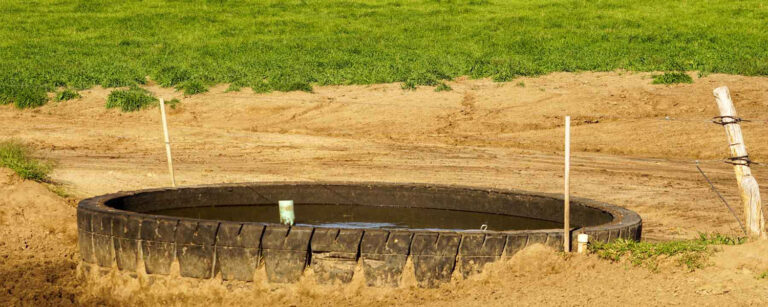
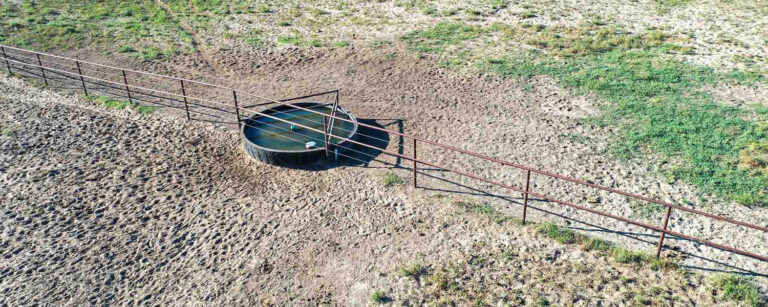
At Whitetail Farm, the structure of ten individually fenced pivots, each with independent water, allows the operation the flexibility to manage those intervals as needed. The rotation can be adjusted based on forage conditions, season, and herd size without being constrained by shared water infrastructure.
Water and the Ogallala Aquifer
Underlying the operation is one of the most significant water resources in American agriculture. Whitetail Farm sits above the Ogallala Aquifer, the world’s second-largest aquifer. In the Nebraska Sandhills, freshwater saturation levels reach up to 1,200 feet. The farm’s 10 irrigation wells are high-volume producers with very little drawdown and no pumping restrictions, certified by the Twin Platte Natural Resource District.
For a grazing operation that depends on consistent forage production across a 130-day growing season, water security matters as much as the rotation plan itself. Livestock water is distributed through a pipeline system to all pivots, supporting cattle movement during rotation.
What the Operation Supports
The current operation supports nearly 800 cow-calf pairs through the summer grazing season and still produces 650 tons of winter hay. The pivots are capable of row crop production as well, with a 1,168±-acre corn base, providing a future owner with operational flexibility beyond the grazing program.
Improvements include new pipe corrals, a 40’x76’-foot steel shop, and three 22,000-bushel grain storage bins. All pivot equipment has been updated with new tower boxes, panels, and driveline components.
“With the asking price of $5,975,000 and ability to summer 800-plus cows, this property just makes sense. Nowhere can you find this AUM capacity for this price.”
Mark Johnson, Farm, Ranch and Land Broker, Hall and Hall Partner
For cattle operators looking to expand a summer grazing program, or investors evaluating high-quality irrigated agricultural land in one of Nebraska’s most productive regions, Whitetail Farm represents the kind of operational foundation that takes years to build.
Contact Mark Johnson at Hall and Hall to arrange a private showing.
WHITETAIL FARM