Land
How to Buy a Ranch
From the Dream to the Right Property
Oct 30, 2026 | Hall and Hall

Hall and Hall partner Tim Murphy on where buyers start, how the search narrows, choosing a region, what kills deals, and why cash buyers still call the finance team.
Almost every ranch purchase starts with a buyer’s dreams
and expectations. Where it ends depends on how well those dreams and expectations are translated into a place that exists, at a price the buyer can pay, in a region that suits how they want to live.
“We always start off with a dream. All state lines aside, what do you envision? What type of landscape are you looking for? Do you want to be close to community, or do you want to be on the moon? Start with what you envision and understand that there are going to be concessions.”
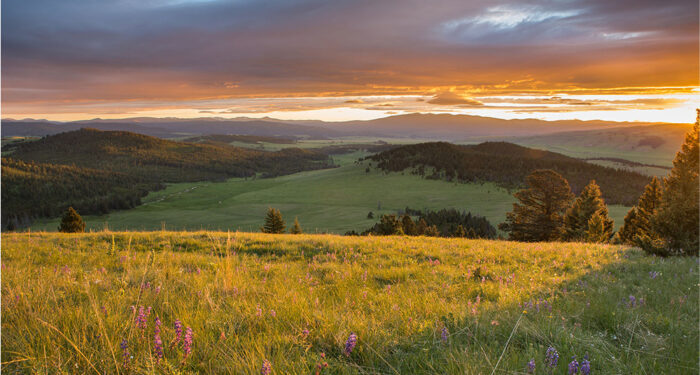
Tim’s point about concessions is worth taking seriously. The property everyone imagines is a rolling foothill ranch backing onto national forest with a trout stream running through it in a private setting close to a mountain community. If he had a million of them, he says, he would sell them all, at all levels of pricing. Real ranches involve trade-offs, and the sooner a buyer understands which ones they can live with, the faster the search moves.
Budget belongs in that first conversation, too. Tim raises it early because showing a buyer properties at several times their budget serves no one. The buyer will conclude that what they want costs more than they will spend, and they will no longer be a buyer. You have to inject realities right up front and adjust accordingly.
Where do you want to be?
For buyers who do not live in the West, the hardest question is often geographic. They may have a romantic attachment to a state without knowing much about it, and states are big and varied places.
“If you’re selling the greater Yellowstone ecosystem, it is vastly different from one corner to another.”
Tim’s method is an aerial tour, using satellite mapping and verbal color to walk buyers through the valleys, the towns and the rivers so they can see how an area fits together before they commit to a trip. A small ranching town might be a bar, a mercantile, a couple of grain elevators and a rodeo ground. A buyer needs to know that and decide if it’s appealing before touring a nearby property.
Choosing between states is decided in a similar fashion. Tim asks buyers to describe what they visualize, then matches it to the places that deliver it, which might include the northern Rockies, central Rockies or somewhere on the Great Plains. Specific requirements narrow it fast. Private fishing, for instance, is hard to secure in Montana because of the state’s stream access laws, and easier in Wyoming or Colorado. Proximity to skiing, mountain communities, landscape type, national parks, elk country or a particular kind of river all point to particular regions. Specifically, location makes no difference to us as Hall and Hall brokers, but our collective first-person experience across the vast areas we work in allows us to consult with buyers at a level that very few in the industry have the ability to replicate. We are very tuned into our markets, and our many decades of experience in exploring the regions become quite valuable to those following a dream.
What buyers say they want, and what they actually want
Buyers’ requirements change once they start looking. That is normal, and the only reliable way to discover what a buyer really wants is to put them in the passenger seat of a truck or a helicopter and explore.
“It’s so important to see this through their eyes, so I can see what they’re experiencing and understand what turns them on and what turns them off. It helps me develop their focus.”
The process is shorter than it used to be. Where buyers once spent a week driving from ranch to ranch because there was no other way to see them, video, mapping and satellite imagery now let them decide on properties from home. And following that, a helicopter can cover in a day what takes four days in a truck. The tour element has not disappeared, but it is now a decision-making tool rather than a discovery one.
What Kills Deals
By the time a ranch is under contract, the buyer obviously likes it. What breaks deals is what they did not know in the beginning.
“It’s the unknowns. If we don’t do a little bit of front-end homework and something comes up, like a road easement that goes right through the ranch that is not of record or a water right issue, that’s the boogeyman that comes out of the closet. You want to discover the boogeyman before you get to a buyer. If you disclose things up front, people can digest it. If they’re spoon-fed it in due diligence, they start to question the purchase and that is where things begin to fall apart.”
Access, privacy, water, neighbors and public land boundaries are the usual sources of surprise. A parcel of public ground beside the best hunting, an easement nobody mentioned, a boundary that does not match the fence. Tim’s honesty is that every transaction has at least one such moment. The difference between a deal that survives and one that does not is usually how early it surfaced.
Bring Management in Early
Tim is, in his own words, a giant proponent of Hall and Hall’s management division, and he believes every buyer of a medium to large-sized ranch should use it. His reasoning is built around a particular kind of buyer.
“Think of the buyer who’s a CEO of some company in New York City as an example, and maybe has had no exposure to farming or ranching ever in his or her life. This is a smart person but knows nothing about owning these types of lands. In a situation like this, we should bring management in early. Engage the buyer through the due diligence process. Management is going to give a full analysis of the land, how it’s run, whether it’s being managed well, whether the staff are the right people, as well as provide a high-level professional view as a new buyer comes into operations on any farm or ranch.”
Tim frames it as insurance on the value of the purchase. A new owner who understands the operation will not be run over by the agricultural side, will not arrive to find the grass gone and the ditch empty, and will not have to be the one to dismiss a long-serving manager who is not working out. The management team provides that separation, along with what Tim calls a 101- to 300-level education in land management.
Cash, Finance, and Why Buyers Use Both
Most of Tim’s buyers, he estimates around 95 percent, buy with cash. Cash makes a strong buyer because there’s no finance contingency, and a clean close. But there’s more to it.
“With cash, they become a strong buyer. They buy it with cash and with no contingencies related to finance, and close on it. But then at whatever rate of interest they’re getting, their cash is making more, so they’ll lever themselves back out, finance it, and put the money to work.”
Financing these types of assets is where a specialist agricultural lender is best utilized. Conventional banks, Tim says, tend to value ranches on a commercial basis and do not understand the asset. A buyer who brings a city banker into a ranch transaction faces a real headwind, and the appraisal element is usually cumbersome, particularly in non-disclosure states like Montana. Hall and Hall’s specialized finance team exists precisely because of that gap.
The epiphany
What Tim enjoys most about the work is the moment a buyer stops critically evaluating and starts falling in love. It happens during a tour, the private conversation between spouses, the shift from whether to how. He describes the job as matchmaking. And he tells every buyer what will happen after they have owned the place for a while.
“They’re going to realize that a ranch isn’t just an object. It’s a living thing. And once that’s realized, there develops feelings of responsibility for it. A nurturing and a need to take care of it. A relationship is developed with the land that was unexpected and in a way that, for most, is indescribable.”
Frequently Asked Questions
Do most ranch buyers pay cash?
In Tim Murphy’s experience the large majority do, because cash makes a strong buyer. Many then finance the property after closing through a specialist agricultural lender and return their capital to work. But for others, the lending team at Hall and Hall makes the whole process comparatively quite easy.
How do I start looking for a ranch?
Define what you envision, including landscape, proximity to community and how you will use the property, then set a realistic budget.
Which state is best for buying a ranch?
It depends on the requirement. Private fishing is easier to secure in Wyoming or Colorado than Montana because of stream access laws; other needs point to other regions. There are beautiful places in every Western state, including the Great Plains.
About Tim Murphy
Real Estate Partner | Hall and Hall Brokerage | Bozeman, Montana
Tim has worked in ranch real estate since 1999 and is licensed in Montana and Wyoming, with particular depth in the Greater Yellowstone region and the Northern Rockies. A lifelong outdoorsman and photographer, he brings a working knowledge of wildlife management and aquatic development to helping clients understand how a ranch operates and what drives its value.
Profile: https://hallhall.com/team-member/tim-murphy/
Hall and Hall Brokerage: https://hallhall.com/ranches-for-sale/
Phone (406) 577-3741 | Email tmurphy@hallandhall.com