Land

Buying a Ranch: Due Diligence and First 90 Days

Nov 10, 2026 | Hall and Hall

Buying a Ranch? What to Check Before Closing and What to Do in the First 90 Days

A practical guide for first-time ranch buyers from Jim Fryer of Hall and Hall’s land management: what inspections miss, how to read the seller’s numbers, and the mistake to avoid in year one.

A ranch purchase is unlike any other property transaction and Jim Fryer of Hall and Hall’s land management helps buyers make sense of what they’re acquiring, and then helps them get through the first year or more.

What May be Needed Beyond a Standard Inspection

Carrying capacity, water infrastructure, fence conditions, noxious weeds and lease encumbrances all belong on a due diligence list. But Jim starts with access and privacy.

“Everyone wants great access, and they all want privacy at the same time. Privacy can be a large moat, so to speak, that being the land. And then being able to put their compound in a place that is private and workable with the topography and the land type.”

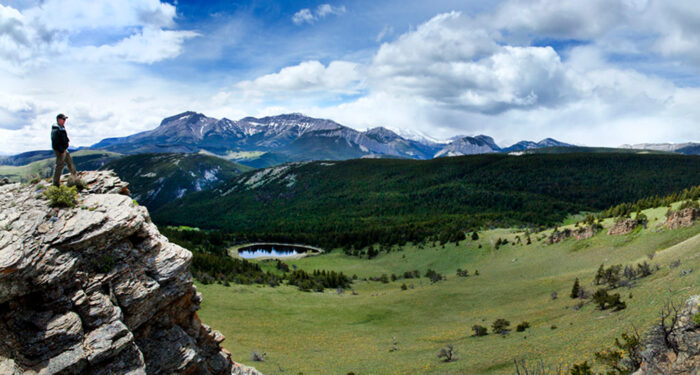
Next comes layout. Is the ranch contiguous? Does it border public land? Does it encompass an entire drainage or creek system? These are the qualities that produce what Jim calls the wow factor, the sense a buyer gets on the ground of whether a place fits. It’s tough to envision on paper, and buyers tend to develop a feel for a fit over several tours.

Then there is the existing operation. The question is not simply whether it is run well but whether it is conducive to what the buyer wants to do, and if not, how changing it might affect the land.

“There are some areas that require a certain amount of cattle grazing to stay healthy. If they don’t like cattle grazing, what’s the alternative? Maybe the answer is to lease it out to someone else.”

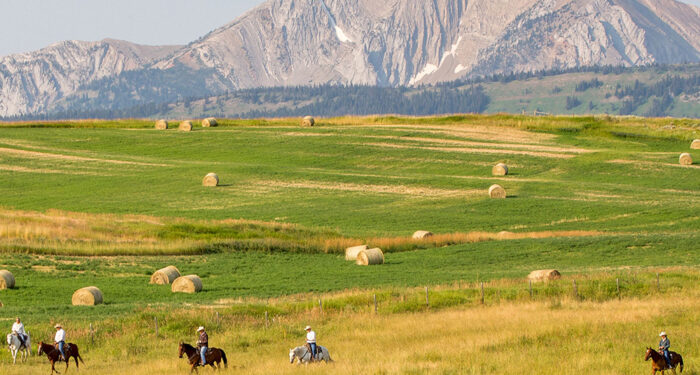
Buyers who are concerned that a lease may undermine privacy can be reassured. Jim points out that a grazing lease might require only two or three people to have access, or the owner’s own crew can look after the lessee’s cattle. Leases can be, in his estimate, 95 percent private.

Irrigation pivot running over lush hay field

Test the Seller’s Income Figures

Jim and his team calculate the ranch’s carrying capacity, factoring in hay production and irrigated versus non-irrigated acreage, then translate it into an estimate of revenue and the costs that accompany it. Much of the work can be done remotely, with an on-the-ground component to confirm it. The result is an independent benchmark against the seller’s figures, and a model that can be adjusted to show what happens if the buyer makes any changes to suit their own plans.

The Staff Question

If a ranch comes with people, should they stay? Where possible, Jim favors keeping the existing staff in place. The management role is assessed independently to make sure it fits the new owner’s goals. He speaks from experience: his father was the new manager who came into an existing operation, and the family developed a rule of thumb.

“There’s five to ten percent who leave right away. They don’t want any part of it. There’s another ten percent who think they know best how to run it, and two years down the road they know they’re not a fit and they’re gone. And you still have eighty percent of the original crew, and they know what they’re doing.”

That 80 percent carries knowledge that can be hard to replace, such as where the elk are at a given time of year, how the water runs, what breaks in February. Hall and Hall’s team can help assess whether the existing leadership should stay, estimate how many crew members will still be there in two years, and plan accordingly.

The First 90 Days After Closing

Jim’s priorities following closing are, in order:

One Single Piece of Advice Jim Gives Every Buyer

“See the ranch for all of its seasons first. Don’t come in and make big changes or build in the first six months. If you have a building site you really like for your main home, make sure it’s still the same site that you want in January.”

In his experience, the owners who end up most satisfied are the ones who waited one to two years to really get to know the property before committing to a major project.

Horses running along a fence in the snow

When to bring in Hall and Hall’s Management Team

Because the management division sits within Hall and Hall, it can be involved before closing, helping with due diligence and working through the various questions and options for the property. This happens on roughly a quarter of transactions, and it is most valuable for first-time buyers.

After closing, the team helps define the manager’s role, sources candidates, supports the manager through the first months, and steps in during the interim so the ranch is never left unattended. 

Frequently asked questions

What should I check before buying a ranch?

Beyond the standard inspection, access and privacy are high priorities, including whether the ranch is contiguous, what it borders, water rights and uses, whether the existing operation suits a buyer’s plans, and the land’s true carrying capacity relative to the seller’s income figures.

Should I keep the existing ranch staff after buying?

Usually yes. In Jim Fryer’s experience, most of the crew stays and carries knowledge of the land that is tough to replace, though the manager role is assessed separately.

What should a new ranch owner do first?

Secure the staff, keep the existing operation running without major changes for at least a full year, put leadership in place, engage a CPA with agricultural expertise, and get a handle on irrigation and water rights.

About Jim Fryer

Director, Management Group | Hall and Hall Management | Bozeman, Montana

Jim was raised on cattle and recreation properties in the Northern Rockies and spent his early career in risk management and commodity merchandising with Cargill, including international assignments. He holds degrees in animal science and agricultural business and a master’s in agricultural economics from Colorado State University, and now serves as a Director in Hall and Hall’s leadership out of Bozeman and on the Management team.

Profile: https://hallhall.com/team-member/jim-fryer/

Hall and Hall Management: https://hallhall.com/management/

Phone (406) 577-3740  |  Email jfryer@hallandhall.com